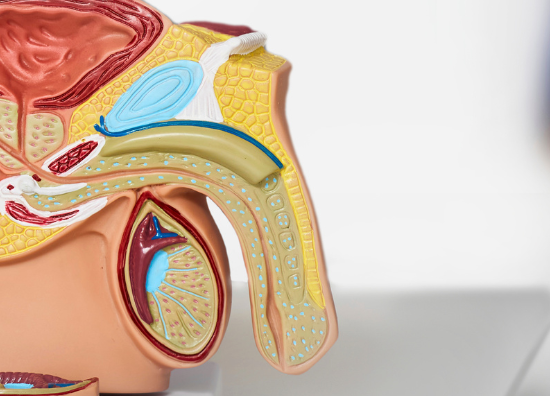
If you have a tight foreskin you'll probably relate to this client enquiry
‘I have a tight foreskin and it really impacts my sex life. It’s painful, I’m embarrassed and I avoid intimacy because of that. I’d like to be able to have a full sexual relationship where I can feel relaxed – is this something you can help with?’
Whilst Phimosis (a tight foreskin) is not highly common, the enquiry above is one I receive more often than you might think. Sometimes – as in the example above – the client is specifically trying to address the issue, and sometimes they don’t mention it until we’re at the point of genital massage in the session. It’s often something they’ve come to live with, found ways to work around during masturbation or partnered sex, or it’s mild enough not to cause huge concern.
Why it's important to seek medical advice first
However, if this is an issue that’s concerning you (even mildly), it’s really important to seek medical advice (this blog is not medical advice) to get a clear picture of what is going on and what your options are. Many men avoid talking to their GP or healthcare provider because of embarrassment or shame, but left unaddressed it can have effects beyond pleasure and intimacy.

Potential complications of untreated phimosis
Hygiene
If your foreskin can’t retract, cleaning becomes difficult. Bacteria can build up, increasing the risk of inflammation and potentially creating more tightness.
Progressive tightening
Increased inflammation (or if underlying Lichen sclerosus is present) can lead to the foreskin developing a fibrous, inelastic ring. The skin may crack, bleed, or feel fragile. This shifts the situation from just ‘a tight foreskin’ to pathological phimosis, which is less likely to resolve without medical treatment.
Paraphimosis (urgent complication)
This is the main urgent complication: the foreskin gets pulled back and becomes stuck behind the glans. This causes swelling and makes it difficult to return the foreskin forward. If severe, it can impair blood flow and needs prompt treatment.
Urinary issues
These are more common in tighter or scarred cases and can include ‘ballooning’ of the foreskin, a weak or spraying stream, and trapping or dribbling of urine.
Penile cancer (rare)
There is an association between long-standing phimosis and Penile cancer, likely due to chronic inflammation, poor hygiene, and HPV persistence. It’s important to retain context here: penile cancer is rare overall, and phimosis is a risk factor, not a direct cause.
Why does phimosis occur in adults?
It’s far more common that a tight foreskin is something that develops gradually in life, rather than something that has simply been there since birth and never addressed. It’s completely normal for boys to have a non-retractile foreskin in early life. Separation of the foreskin from the glans happens gradually and by late adolescence, the vast majority can fully retract. Whilst some men may have had mild tightness since youth that was never addressed (most young men are rather reluctant to talk to their parents or caregivers about their genitals…), a penis can be completely normal and retractile through adolescence, and then develop phimosis later. Common causes include:
Chronic inflammation
e.g. repeated irritation, infections, poor hygiene, over-washing with harsh soaps
Lichen sclerosus
A significant cause of adult phimosis which leads to a white, fibrous, inelastic ring
Microtrauma
Repeated small tears (often during sex or forceful retraction) → healing with tighter scar tissue
Diabetes
Higher risk of infections and skin changes → increased rates of phimosis
Recurrent balanitis
Cycles of inflammation → tightening over time
Medical treatments for phimosis (what the evidence supports)
Massage, usually in combination with a prescribed corticosteroid cream, is often suggested as a first option for addressing mild cases of phimosis. This is based on the assumption that there is no underlying scarring or lichen sclerosus. In more severe cases, the evidence-based non-surgical treatment is usually potent topical corticosteroids, or more recently gradual dilation devices – sometimes before surgery, or to try to avoid surgery. If these approaches aren’t effective, treatment typically moves to surgical options such as a preputioplasty (which loosens the foreskin while preserving it) or a circumcision (partial or full removal of the foreskin), depending on the severity and underlying cause. These procedures are generally straightforward and have high success rates in resolving symptoms. However, surgery always carries it’s own risks (e.g. more/new scar tissue during healing, numbness, loss of sensitivity or hypersensitivity – not to mention the emotional and psychological considerations).
Can massage help a tight foreskin?
For milder cases (where there is no scarring), gentle, regular manual massage may support improved elasticity and awareness in the tissue. Oils such as coconut oil or castor oil can be helpful as a lubricant and for general skin health, making the process more comfortable and consistent. What’s important here is how you approach it: slowly, regularly, and without force.

A gentle self-massage routine for mild phimosis
Aim for 2–3 times per week, spending 10–20 minutes with the following mindful massage techniques. Be very clear that this is separate from masturbation. Many of us only touch our genitals in an arousal-focused way – this may be a very different way of connecting to your body. Think of it more like maintenance, similar to cleaning your teeth.
1. Warm the tissue
Start with a warm bath, or apply a warm flannel for a few minutes. This softens the tissue and helps your nervous system relax.
2. Use a suitable oil
Use a good-quality oil for this self-massage. I recommend organic coconut oil or organic castor oil (the main component of which is ricinoleic acid, often associated with supporting improvements in scar tissue and skin health).
3. Begin with the perineum and surrounding tissue
Spend a few minutes massaging the perineum with the finger pads of your first few fingers. Use small circles with varying pressure: softly on the skin, then a little firmer into the fascia, and then deeper into the pelvic floor muscles.
Include some sliding movements from the perineum, along the crease of the groin, and onto the front of the pelvis and hip bones. This helps relax the surrounding fascia – not just the foreskin itself.
4. Work along the shaft
Next, massage from the lower belly/front of the pelvis (the very base of the penis) onto the shaft.
Use the heel of your hand to slide from the hip bones and belly button toward the pubic bone. Then wrap the thumb and forefinger around the shaft near the base and slide toward the tip. This stretches the skin along the shaft and gently moves the foreskin, giving you a bit more ‘slack’ to work with.
5. Gentle work with the foreskin
With the excess skin slid off the tip, you can now work more directly with the foreskin and preputial ring.
Insert your index finger into the central opening and gently grip the skin between finger and thumb. Hold for a few seconds, apply a few soft squeezes, then spend 45–60 seconds using a gentle rubbing or circling motion.
Move around the circumference (for example, 12, 3, 6 and 9 on a clock face), repeating this pattern. Take your time – never force or aggressively stretch the skin. If one area feels tighter, spend a little longer there.
6. Gentle opening stretch
Gently slide the index fingers of each hand into the opening, with the pads facing away from each other. Slowly move the fingers apart to create a mild stretch.
7. Encourage natural retraction
Let the shaft rest against the lower belly. Using plenty of oil, slide your hands along the underside from the tip toward the testicles. This can gently encourage retraction, but should never be forced.
8. Integration
Move between techniques as you wish. When you’re finished, take a couple of minutes to simply cup and hold your genitals. This can help the body integrate the work and settle. Make sure to wash thoroughly after your massage to avoid any build up of oil under the foreskin.
Support, progress and when to get help
If you’re working with a tight foreskin, patience and consistency matter far more than intensity. Following the above protocol 2-3 times per week, for a minimum of 8 weeks, should show improvements in mild cases. Anything involving pain, cracking, or more severe restriction should be assessed medically. If in doubt, always go and consult your medical practitioner.
If this is something you’re dealing with and you’d like support approaching it in a more guided, body-aware way, you’re welcome to book a session with me. My work focuses on helping you feel more comfortable, informed, and connected to your body – without pressure, and at a pace that feels appropriate for you. Sessions can include coaching on self-massage techniques, and the opportunity to receive these techniques as part of a full-body massage.
With Love,
Libby
x